Restore your smile with dental implants
Personalised solutions to replace one or more teeth, with digital planning and attentive follow-up at our clinic in Vilanova i la Geltrú.
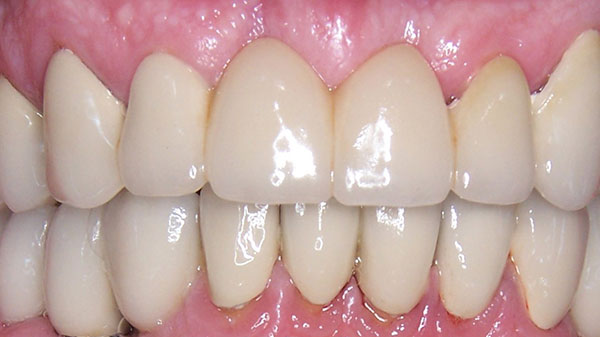
Dental implants are an effective way to replace missing teeth and restore chewing, appearance and confidence when smiling. They act as artificial roots supporting a crown, bridge or prosthesis placed afterwards.
At Centre Dental Vilanova, we assess each case individually. Clinical examination and imaging help us evaluate the available bone, gum health and the most suitable options for each patient.
What solutions do we offer?
Single-tooth implant
Replaces one tooth without having to reduce the neighbouring teeth. A crown is fitted onto the implant and designed to blend with the rest of your smile.
Implant-supported bridges
When several adjacent teeth are missing, a fixed bridge can be supported by implants. The number of implants depends on the clinical situation and distribution of chewing forces.
Full-arch rehabilitation
For patients who have lost all or almost all the teeth in an arch, implants may support a fixed or removable prosthesis. The choice depends on available bone, general health, patient needs and maintenance possibilities.
Implant-retained overdentures
These removable dentures are stabilised by implants. They offer greater retention and comfort than conventional dentures while remaining removable for cleaning.
Bone regeneration
When bone volume is insufficient, regeneration techniques, grafts or a sinus lift may be necessary. These procedures are recommended only after a detailed assessment.
What does treatment involve
- Assessment and diagnosis. We perform a full examination and the necessary tests. When indicated, a 3D CT scan assesses bone volume and its relationship with important anatomical structures.
- Personalised planning. Before starting, we explain the alternatives, stages, approximate timescale, costs and necessary care.
- Implant placement. The implant is placed under local anaesthesia in a planned procedure. Duration depends on the number of implants and complexity of the case.
- Osseointegration. Over the following weeks, the implant gradually integrates with the bone. The time required varies between patients.
- Definitive prosthesis. Once adequate stability has been achieved, the definitive crown, bridge or prosthesis is fitted, adjusting the bite, function and appearance.
- Maintenance. Check-ups, daily hygiene and professional maintenance are essential to care for implants and surrounding tissues.
Implants and temporary teeth on the same day
In selected cases, implants and a fixed temporary prosthesis can be placed on the same day. Known as immediate loading, this technique can avoid a removable prosthesis during integration.
The prosthesis fitted that day is temporary. The definitive prosthesis is made later, once the tissues have healed and the implants have adequate stability.
Who may be suitable?
Immediate loading is not suitable for every patient. Among other factors, we assess:
- Bone quantity and quality.
- Initial implant stability.
- Number and position of implants.
- Gum health.
- Smoking, teeth grinding and other risk factors.
- Ability to follow a specific diet and care instructions during healing.
Benefits of dental implants
- Restore chewing and stability.
- Provide a natural appearance when the prosthesis is carefully planned.
- Avoid reducing healthy teeth in many single-tooth replacement cases.
- May help preserve bone in the treated area.
- Offer solutions for replacing anything from one tooth to a complete arch.
Can every patient have implants?
Most people can consider this option, but general health, medication, gums, available bone and habits must first be assessed. Certain uncontrolled conditions, heavy smoking or inadequate hygiene can increase the risk of complications.
If implants are not the most appropriate option, we will explain other possible prosthetic solutions.
Technology and planning
Digital planning helps us understand the anatomy of the area and prepare treatment more precisely. Depending on the case, we may use:
- 3D dental CT (CBCT).
- Digital radiography.
- Intraoral scanning.
- Digital prosthesis planning.
- A surgical guide when indicated.
Technology is a supporting tool. The team’s diagnosis and clinical experience remain essential in deciding on treatment.
Clinical cases


Implants + Porcelain Veneers


Single-Tooth Implant


Single-Tooth Implant + Porcelain Veneers

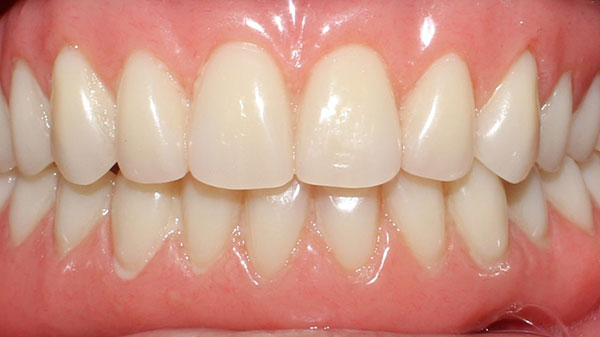
Overdenture


Fixed Metal-Ceramic Prosthesis

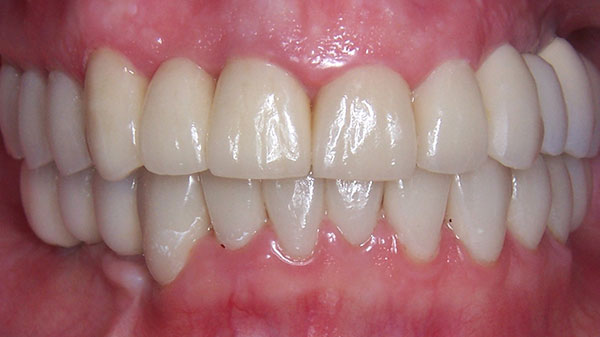
Zirconia and Metal-Ceramic Crowns


Fixed Prosthesis