Straighter teeth and a healthier bite
Orthodontic treatments for children, teenagers and adults, with options adapted to each age, need and lifestyle.
Orthodontics corrects tooth position and certain bite problems. As well as improving your smile, it may make cleaning easier, distribute chewing forces more evenly and help prevent wear or discomfort associated with poor occlusion.
At Centre Dental Vilanova, we assess each case individually to recommend the most suitable system for the patient’s age, diagnosis, preferences and needs.
Types of orthodontic treatment
Metal braces
An effective, versatile system for many alignment and bite problems. Brackets are attached to the outer surfaces of the teeth and connected by wires that gradually guide tooth movement.
Tooth-coloured braces
Work in a similar way to metal braces, but use materials close to the colour of the tooth for a more discreet appearance.
Clear aligner orthodontics
A series of custom-made, transparent, removable aligners gradually moves the teeth. They must be worn for the prescribed number of hours and changed according to the orthodontist’s plan.
Benefits of clear aligners
- Discreet when worn.
- Removable for eating and cleaning.
- Make brushing and flossing easier.
- Usually cause less rubbing than braces.
- Allow planned movements to be mapped digitally.
Orthodontics at different ages
Children’s orthodontics
During growth, we can identify problems with eruption, jaw development or bite. Some children benefit from interceptive orthodontics to guide growth or prevent a problem from worsening.
Orthodontics for teenagers
Braces or aligners may be used at this age, depending on diagnosis and the ability to follow instructions correctly.
Orthodontics for adults
There is no maximum age for improving tooth alignment, provided the teeth, gums and bone are healthy enough. Periodontal problems must be controlled before and during treatment.
What problems can we treat?
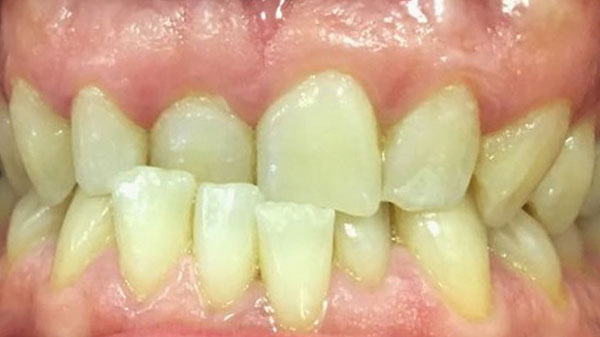
- Crowded teeth.
- Gaps between teeth.
- Crossbite.
- Deep bite or open bite.
- Displaced or rotated teeth.
- Bite problems requiring an orthodontic assessment.
The appliance and treatment objectives are determined after a complete assessment.
Our process
- Initial assessment. We listen to your goals and examine the teeth, gums, bite and joint.
- Orthodontic assessment. We collect the necessary records, which may include photographs, radiographs and an intraoral scan.
- Diagnosis and planning. We explain the problem, objectives, alternatives, estimated duration and costs.
- Starting treatment. We fit the braces or provide the first aligners and explain how to care for them.
- Regular reviews. We monitor progress and make necessary adjustments.
- Retention. At the end, retainers help maintain the new tooth positions.
Technology and planning
An intraoral scanner provides a digital record of the mouth without conventional impressions in many cases. With aligners, digital planning helps visualise the intended movements and explain each stage.
The simulation is a planning and communication tool; it does not guarantee the exact final result.
Clinical cases


Conventional braces